

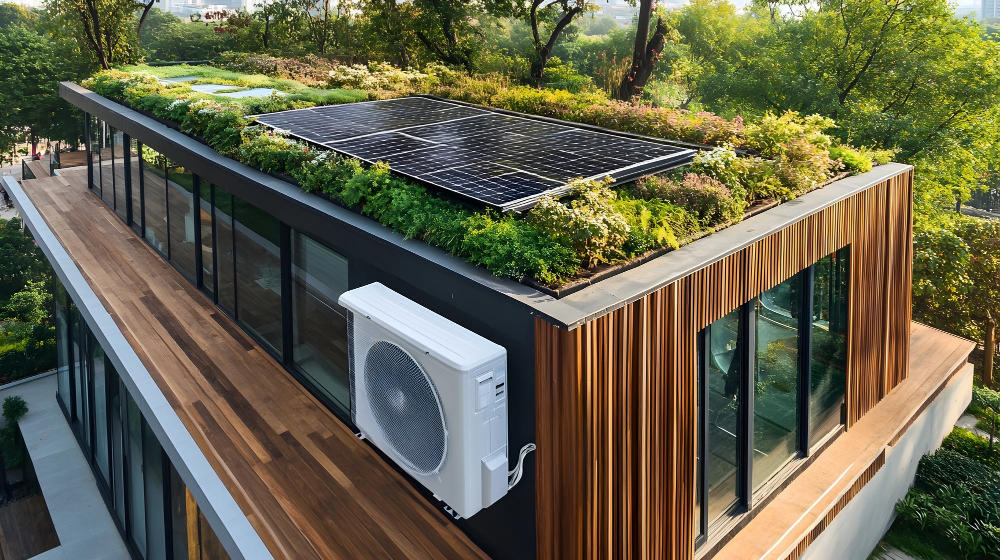
In the summer, in the middle of a scorching day, the air conditioner is running at full capacity. This is precisely when the roof covered with solar panels is producing record amounts of electricity. This is no coincidence—there is a natural synergy between air conditioning and solar power that is worth consciously leveraging.
The question most panel owners ask themselves before buying an air conditioner is simple: is the electricity from the roof enough for cooling? The answer depends on two numbers—how much power the air conditioner draws and how much the system generates during the summer peak.
Why do air conditioning and solar panels work well together?
Hot days are also the days with the longest hours of sunlight. When the temperature exceeds 30°C, the solar panel system is operating at peak output—and that’s exactly when the air conditioner needs it most.
This coincidence makes the air conditioner one of the best consumers of energy from the panels. Unlike a washing machine or dishwasher, which are used at various times, the air conditioner operates primarily during the day when the sun is at its strongest.
The effect is twofold: instead of buying electricity from the grid, you use your own. At the same time, you reduce the amount of energy fed back into the grid for a lower rate than if you were to buy it back later.
How much electricity does an air conditioner use?
This is the question with which every analysis should begin. Air conditioning versus photovoltaics—to assess whether the panels will meet the demand, you need to know how many kilowatt-hours the unit consumes. This depends on two factors: the air conditioner’s cooling capacity and its energy efficiency ratio (COP or SEER).
A modern A++-rated inverter air conditioner with a cooling capacity of 3.5 kW actually consumes between 0.6 and 1.2 kW of electricity depending on conditions—because the inverter constantly adjusts the power output. An older model with the same cooling capacity but without an inverter constantly draws 1.2–1.5 kW, regardless of how much the room has already cooled down.
At eight hours of operation per day, this translates to 5–10 kWh of daily consumption per unit. If you have air conditioners in the living room, bedroom, and office, daily consumption can range from 15 to 25 kWh.
Will my solar PV system be enough?
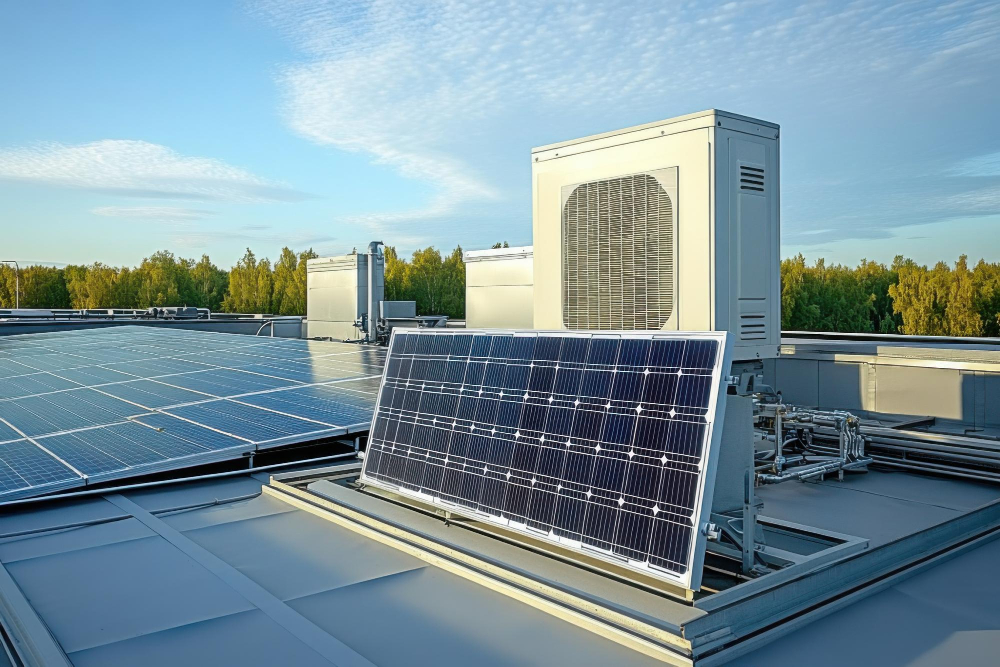
The average Polish PV system for a single-family home has a capacity of 6–10 kWp. On a sunny summer day, it produces 30 to 50 kWh. This is often enough to cover both daily household consumption and the operation of the air conditioner.
The problem arises when the system is small (3–4 kWp) and also powers other appliances. In that case, the air conditioner may draw more power than the panels are producing at that moment—and the grid covers the difference. This is still a favorable situation, because at least part of the energy consumed comes from your own source.
How can you check this? The easiest way: look at your inverter’s app and check the hourly production on a hot day. Compare it with data from your electricity meter or the air conditioner’s documentation. The difference is the approximate amount of power you’ll need to purchase from the grid.
When should you consider expanding your system?
If you’re planning to buy an air conditioner and already have a solar PV system, this is a good time to assess whether your current system’s capacity is sufficient. A PV designer will evaluate how many additional panels might make sense based on your production history and the air conditioner’s projected energy consumption. We, on the other hand, will advise you on the appropriate cooling capacity for a given room and which model will be the most energy-efficient.
Inverter air conditioner – why is this important for PV systems?
An inverter air conditioner adjusts the compressor’s power smoothly—instead of cycling on and off at full power, it operates at 30%, 50%, or 80% capacity depending on demand. This has a direct impact on its compatibility with photovoltaic systems.
A PV system produces energy intermittently: a cloud blocking the sun for a few minutes can reduce output by 40–60%. An inverter air conditioner adapts to this automatically, drawing less power when it is limited. A classic on/off air conditioner cannot do this—it either draws full power or does not operate.
From the perspective of integration with photovoltaics, inverter air conditioners are clearly the better choice. Their higher purchase price pays for itself in lower electricity bills.
Energy Storage and Air Conditioning
Systems with battery energy storage allow you to use electricity generated during the day in the evening and at night as well. In the context of air conditioning, this means the ability to cool bedrooms at night using stored solar energy.
This is a complex and costly topic. Energy storage systems are selected in consultation with the photovoltaic installer during the system’s design or expansion phase. It’s worth planning this comprehensively—retrofitting, or adding storage to an existing installation without prior preparation, can be more difficult and expensive.
How does air conditioning work with the prosumer billing system?
In Poland, prosumers can feed excess energy into the grid and draw it back as part of the net metering system. If your system has accumulated a surplus on the grid during the spring months, you can use it to power your air conditioner in the summer.
This means that air conditioning in the summer can effectively be free if your solar panels generated enough surplus energy in the spring. This is one of the factors worth considering when planning to purchase both solutions at the same time.
Practical tips for users of air conditioning with solar panels
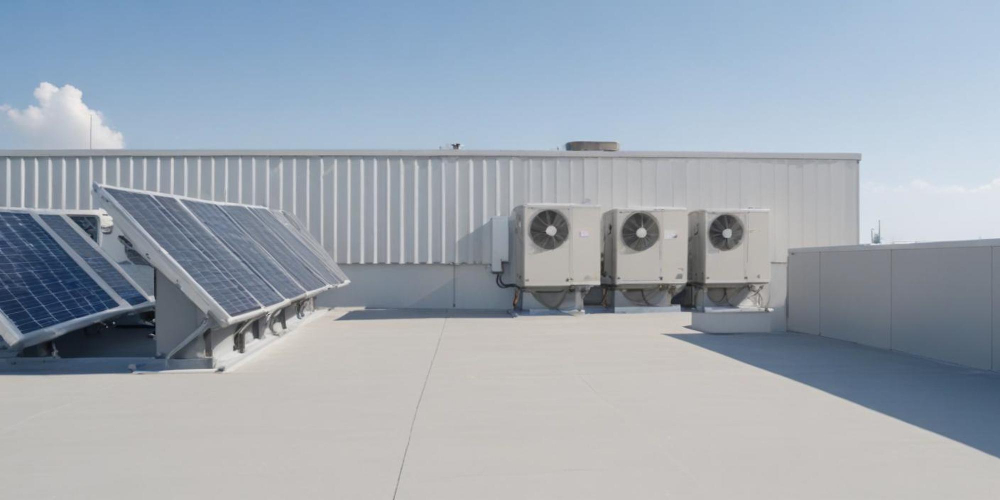
Set the air conditioner’s timer to turn on between 10 a.m. and 4 p.m. This is the time when solar panel production is at its highest on summer days. Avoid setting it to full cooling early in the morning when solar production is just beginning.
If you have an app for managing your photovoltaic system, check if it supports automatic control of loads. Some systems can turn on the air conditioner automatically when the panels are producing a surplus—without any intervention on your part.
Make sure to have your air conditioner serviced regularly. Clogged filters and a dirty outdoor unit can increase energy consumption by as much as 20–30%. When working with PV, every wasted kilowatt-hour is a loss.
Frequently Asked Questions
Can an air conditioner be powered directly by solar panels without an inverter?
A standard air conditioner requires alternating current (230V AC). Photovoltaic panels produce direct current (DC), which an inverter converts to alternating current. Without an inverter, a standard air conditioner will not work. There are special DC solar air conditioners that can operate directly from the panels, but these are niche devices rarely used in residential installations.
Is it worth buying an air conditioner and solar panels at the same time?
Planning both installations simultaneously makes sense because it allows you to properly match the power of the panels to the planned consumption of the air conditioner. You can consult on both purchases separately—air conditioning with us, solar panels with a PV company—and make an informed decision based on that.
How many solar panels do I need to power an air conditioner?
A single modern 400 Wp panel in full sunlight produces approximately 0.4 kW. An air conditioner with a cooling capacity of 3.5 kW consumes between 0.6 and 1.2 kW of electricity. This means that 3–4 panels under ideal conditions will cover the unit’s current demand. In practice, a reserve is recommended, as the panels do not always operate at full capacity. Precise calculations should be performed by a photovoltaic system designer.
Does an inverter air conditioner use less electricity?
Yes. An inverter air conditioner typically uses 30–50% less electricity than a unit with the same cooling capacity that uses on/off technology. The difference stems from the smooth regulation of the compressor’s power, which eliminates energy loss every time the motor starts.